
Anxiety vs Depression in Adults: How to Tell the Difference


While anxiety and depression often co-occur and share some symptoms, their core experiences differ significantly. Anxiety is characterized by excessive worry and fear about future events, often leading to physical tension. At the same time, depression involves persistent sadness, loss of interest, and a sense of hopelessness about the present and future.
Myth busting: Many people believe that if they didn't have anxiety as children, they can't suddenly develop it as adults. In reality, adult-onset anxiety is surprisingly common and can occur even in people who have never experienced a mental health condition before.
Mental Health by the Numbers
Recent research highlights how common anxiety and depression are among adults:
According to the World Health Organization (WHO), approximately 5% of adults worldwide experience depression, affecting an estimated 280 million people.
WHO estimates that 301 million people worldwide live with an anxiety disorder.
The National Institute of Mental Health (NIMH) reports that nearly 31% of U.S. adults experience an anxiety disorder during their lifetime.
Studies show that anxiety and depression frequently occur together, with 40–60% of patients experiencing both conditions.
In a demanding environment like Beverly Hills, where personal and professional pressures are often high, distinguishing between anxiety and depression is crucial for effective treatment. Customer expectations for resilience and success can inadvertently lead individuals to dismiss or misinterpret their own emotional signals. This issue is often intensified by a culture that values external achievement, sometimes at the expense of internal well-being. If you're trying to understand whether you're experiencing anxiety, depression, or a combination of both, seeking an experienced psychiatrist Beverly Hills residents trust can make all the difference. At The Beverly Hills Psychiatrist, our approach begins with a comprehensive diagnostic evaluation to accurately identify the underlying causes of your symptoms. Treatment is personalized and may include psychotherapy, medication management, or a combination of both, depending on your unique needs and goals.
Feature | Anxiety | Depression |
Primary Emotion | Fear and worry | Sadness and hopelessness |
Focus | Future events | Present or past experiences |
Energy Level | Often restless or tense | Often low or depleted |
Sleep | Difficulty falling asleep | Sleeping too much or too little |
Thoughts | "What if something goes wrong?" | "Nothing will get better." |
Physical Symptoms | Racing heart, muscle tension, sweating | Fatigue, low energy, body aches |
Motivation | Wants relief but feels overwhelmed | Loss of motivation or interest |
Common Treatments | CBT, exposure therapy, medication | CBT, behavioral activation, medication |
Can You Have Anxiety and Depression at the Same Time?
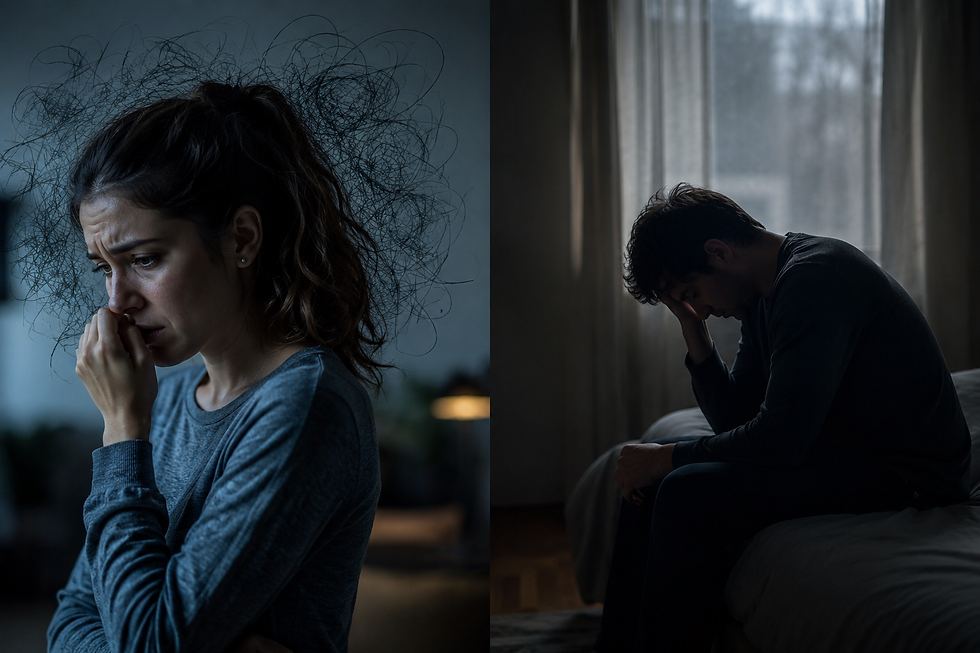
Yes. Anxiety and depression frequently occur together, and many adults experience symptoms of both conditions simultaneously. Because they share symptoms including fatigue, difficulty concentrating, sleep disturbances, and irritability, a professional psychiatric evaluation is often necessary to determine the primary diagnosis and develop an effective treatment plan.
The Future-Oriented Nature of Anxiety
One of the defining characteristics of anxiety is its constant focus on "what could happen next." Unlike everyday stress, anxiety causes persistent worry about future situations even when there is little evidence that something will go wrong. This ongoing anticipation of worst-case scenarios can make it difficult to relax, stay present, or enjoy daily life.
Common symptoms of anxiety in adults include:
Excessive worrying that feels difficult to control.
Racing thoughts about future events or responsibilities.
Feeling restless, tense, or constantly "on edge."
Trouble concentrating because your mind won't slow down.
Difficulty falling or staying asleep due to persistent worry.
Physical symptoms such as a racing heart, muscle tension, sweating, or an upset stomach.
Definition: Excessive and persistent worry, fear, or apprehension about future situations, often disproportionate to the actual threat.
Why it matters: This constant state of alert can exhaust the body and mind, leading to physical symptoms and avoidance behaviors that restrict daily life.
What happens if it's missing: Without recognizing this future-oriented focus, attempts to alleviate distress might target symptoms rather than the underlying fear, leading to ineffective coping strategies.
The Present-Focused Weight of Depression
In contrast, depression is marked by persistent sadness, a loss of interest or pleasure in activities once enjoyed, and a profound sense of hopelessness that often anchors an individual to their current state. The focus is less on future threats and more on an inability to find joy or meaning in the present, often accompanied by feelings of worthlessness or guilt. When Alex, a graphic designer, found himself losing interest in his creative projects, struggling to get out of bed in the morning, and feeling a heavy, unrelenting sadness even when good things happened, these symptoms pointed toward depression.
Definition: A persistent mood disturbance characterized by sadness, anhedonia (loss of pleasure), and a range of cognitive, behavioral, and physical symptoms.
Why it matters: This pervasive negativity can erode motivation, damage relationships, and impair daily functioning, making even simple tasks feel monumental.
What happens if missing: Misattributing this profound sadness to mere 'stress' or 'burnout' delays appropriate intervention, prolonging suffering and potentially worsening the condition.
Physical Manifestations and Their Distinctions
Both conditions can present with physical symptoms, but their nature often differs. Anxiety commonly involves heightened physiological arousal: a racing heart, shortness of breath, muscle tension, and digestive issues, often in response to perceived threats. Depression, however, tends to manifest as low energy, fatigue, changes in appetite or sleep patterns, and generalized aches or pains, reflecting a systemic slowing down. Unlike the standard approach of simply addressing physical discomfort, a more effective method involves understanding the emotional driver behind these symptoms because it allows for targeted treatment that addresses the root cause, rather than just masking the outward signs.
Consider the experience of Maria, a business owner in Beverly Hills. She initially sought help for overwhelming fatigue and difficulty concentrating, believing she was simply 'burnt out.' While these are common symptoms of depression, further discussion revealed that her fatigue stemmed from nights spent wide awake, worrying intensely about her business's future, a clear anxiety component. Simultaneously, her lack of concentration was exacerbated by a pervasive sense that her efforts were futile, a hallmark of depression. This scenario highlights how symptoms can intertwine, making initial self-diagnosis challenging and underscoring the need for a comprehensive evaluation to unpack the distinct threads of anxiety and depression.
Important clarification:
- Experiencing sadness or worry is not clinical depression or an anxiety disorder.
- It is best understood as a normal human emotional response to life stressors, distinct from a persistent, pervasive, and impairing clinical condition.
When this matters:
- When emotional distress significantly interferes with daily functioning, relationships, or work.
- When symptoms persist for weeks or months, rather than resolving after a stressful period.
- When coping mechanisms are no longer effective, or healthy habits are abandoned.
When self-management or DIY may be appropriate:
- For transient periods of stress or sadness that are clearly linked to a specific, temporary life event.
- When symptoms are mild and do not impair daily activities.
When to involve a professional:
- When symptoms are severe, persistent, or worsening.
- When suicidal thoughts or self-harm urges are present.
- When substance use is employed to cope with emotional distress.
Warning signs to watch for:
- Inability to experience pleasure or find enjoyment in anything.
- Pervasive irritability or anger that is out of character.
- Recurrent panic attacks or intense, uncontrollable worry.
- Significant changes in sleep patterns (insomnia or excessive sleeping) or appetite.
If you are grappling with overwhelming sadness, persistent worry, or a combination of both, a clear understanding of your emotional landscape is the first step toward regaining balance. Exploring options for anxiety therapy can provide the clarity and tools needed to differentiate symptoms and embark on a path to sustained well-being. Understanding these factors can help you make a more informed decision about your mental health.
Frequently Asked Questions
Can anxiety and depression really be present at the same time?
Yes, it is very common for anxiety and depression to co-occur. Many individuals experience symptoms of both conditions, and one can often exacerbate the other. Effective treatment often addresses both simultaneously.
What are the main differences in how anxiety and depression feel?
Anxiety often feels like agitated worry, fear about the future, or being constantly on edge, sometimes with physical tension. Depression typically feels like pervasive sadness, a lack of energy, loss of interest in activities, and a sense of hopelessness.
How long must symptoms last to be considered a clinical condition?
For symptoms to be considered a clinical condition, they generally need to persist for a significant period, often two weeks or more for depression and several months for generalized anxiety disorder. The key is persistence and functional impairment, not just transient feelings.
Should I try to manage these symptoms myself first?
Self-management can be helpful for mild, situational stress or sadness. However, if symptoms are severe, persistent, or significantly impacting your daily life, seeking professional evaluation is advisable. Early intervention can prevent conditions from worsening.
What should I look for when choosing a professional for anxiety or depression?
Look for a licensed mental health professional (psychiatrist, psychologist, or therapist) with experience in diagnosing and treating both anxiety and depressive disorders. Consider their approach to treatment and communication style, and ensure they are a good fit for your personal needs. If you're ready to seek help, scheduling a psychiatrist appointment is an important first step toward receiving an accurate diagnosis and personalized treatment.
How do professionals differentiate between anxiety and depression?
Professionals use comprehensive assessments, including detailed interviews about symptoms, their duration, intensity, and impact on daily life. They also consider personal history and family history and rule out other medical conditions through a thorough diagnostic process.
Will medication always be necessary for these conditions?
Medication is one treatment option, but it's not always necessary. Treatment plans often include psychotherapy, lifestyle adjustments, and sometimes medication, depending on the severity of symptoms and individual preferences. Your provider will discuss the best approach for you.
References
WHO. Depression. https://www.who.int/news-room/fact-sheets/detail/depression
WHO. Mental Disorders. https://www.who.int/news-room/fact-sheets/detail/mental-disorders
NIMH. Any anxiety disorder. https://www.nimh.nih.gov/health/statistics/any-anxiety-disorder
Medically Reviewed By
Dr. Nha Bao, MD, Board-Certified Psychiatrist The Beverly Hills Psychiatrist Beverly Hills, California


Comments